— QUTUB MINAR —
Self-Guided Tour
Highlights
The Main Minaret

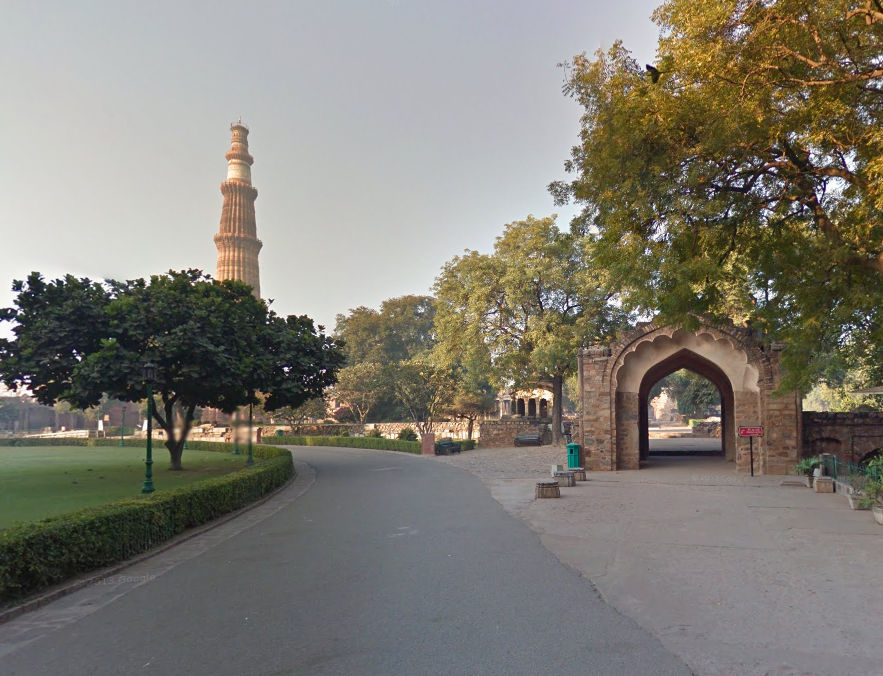
The Qutub Minar was built in the 12th century by Qutb-ud-din Aibak and reflects the rich Indo-Islamic architecture of that period. The monument is admired for its detailed carvings, red sandstone structure, and historical importance. Visitors, however, cannot step inside the minaret.
Quwwat-ul Islam mosque
The Quwwat-ul-Islam Mosque features a spacious rectangular courtyard, surrounded by arcades with intricately carved pillars and a five-arched screen on the western wall. Notably, one can see the defaced images of Hindu deities, a consequence of Islamic iconoclasm.
Iron Pillar
Within the mosque courtyard stands the remarkable Iron Pillar, a relic that predates the Qutub Minar, with origins somewhat debated. Believed to have been brought by the Tomar rulers, it has remained unrusted for over 1,600 years, showcasing ancient India's exceptional metallurgical prowess.

The Tomb of Iltutmish
The 13th-century Tomb of Iltutmish, located in the northwestern part of the Quwwat-ul-Islam Mosque, marks the initiation of royal tomb construction in India. The tomb's interior is richly adorned with inscriptions and geometric and arabesque patterns, reflecting Saracenic influences.
Alauddin Khilji’s Structures
During his reign from 1296 to 1311, Alauddin Khilji significantly expanded the Qutub Complex. He commissioned the Alai Darwaza, a grand ceremonial gateway south of the Qutub Minar, and a madrasa that also functions as his tomb.
To commemorate his military achievements, Khilji laid the foundation of the Alai Minar, a minaret intended to be twice the size of the Qutub Minar. However, his death stalled its completion, and only the unfinished first story remains for visitors to see.
Minor Structures
The complex also houses the Tomb of Imam Zamin and Smith’s Cupola. These offer visitors a glimpse into the impact of the Mughal and British eras on the Qutub Complex.
Walking Route Options
The wealth of monuments inside the Qutub Complex can leave visitors feeling a bit overwhelmed. It helps to plan your route—here are some suggested walking routes:
Full Tour | 120 minutes
Allows time to appreciate architectural details and take photographs.
What you see (in order):
Alai Minar
Iltutmish's Extension and Tomb
Alauddin Khilji's Tomb & Madrasa
Iron Pillar
Quwwat-ul Islam Mosque
Qutub Minar
Alai Darwaza
Tomb of Imam Zamin
Smith's Cupola

What you skip
Mughal Garden & Mosque (closed for access)
Step pyramid (closed for access)
Spiral pyramid (accessible through Mehrauli Archaeological Park)
Classic Tour | 60 minutes
Offers a well-rounded exploration of the complex’s history without feeling rushed.
What you see (in order):
Alai Minar
Quwwat-ul Islam Mosque
Iron Pillar
Qutub Minar
Alai Darwaza
Smith's Cupola

What you skip (in addition to the 120 min route):
Iltutmish's Extension and Tomb
Alauddin Khilji's Tomb & Madrasa
Tomb of Imam Zamin
Quick Tour | 30 minutes
Best for visitors in a hurry but keen to witness the grandeur of the complex.
What you see (in order):
Quwwat-ul Islam Mosque
Iron Pillar
Qutub Minar

What you skip (in addition to the 60-minute route):
Alai Minar
Alai Darwaza
Smith's Cupola
More in the Qutub Minar series