
— HAUZ KHAS —
Hidden Tombs
Beyond Feroz Shah's Madrasa and the Deer Park Lake, Hauz Khas is home to several medieval-era tombs. Little is known about their origins or purpose, which makes them easier to overlook but also deepens the mystery surrounding this area.
Inside the Deer Park
Three of these gems can be witnessed inside the Deer Park. These lie on the side farther from HKV - about 15 mins walk from the lake and past the DDA office.
Kali Gumti
This square tomb with a mihrab on the west was probably built during the Lodi period. Adjacent to this is a walled mosque. The name "Kali Gumti" is descriptive only and refers to its blackened dome.
Bagh-e-Alam Ka Gumbad
Architecturally, the structure is an example of the Lodi period, featuring multiple arched niches on the exterior arranged to resemble separate stories. The interior is a single large chamber.
Bagh-e-Alam ka Gumbad translates to "the domed structure in Alam's garden." This name holds dual meaning—"Alam" can signify "the world" or refer to an individual. This tomb dates back to 1501. A Persian inscription on its western wall suggests it was commissioned by someone named Abu Syed to honor Miyan Shaikh Shihabuddin Taj Khan. Little is known about either of them.
Tohfewala Gumbad
The Tohfewala Gumbad lies to the northeast of Bagh-e-Alam Gumbad. This structure, likely dating back to the Tughlaq era, is far simpler in design than its counterpart but houses several sizable cenotaphs within. Its atmosphere is perhaps the most unsettling of them all.
Near the Aurobindo Market
Five of these gems can be found on the road leading to Hauz Khas Village, near Aurobindo Market.
Sakri Gumti
A "narrow" domed building, named for its low area and size. It has a battlement design ("kangura") on the parapet, and the dome's ceiling features a painted medallion. This building likely dates from the Lodi period, but it is unclear who is buried here.
Choti Gumti
With a very narrow shape, this one is more likely to be a gateway than a tomb. It has a kangura design with remnants of a wall still attached.
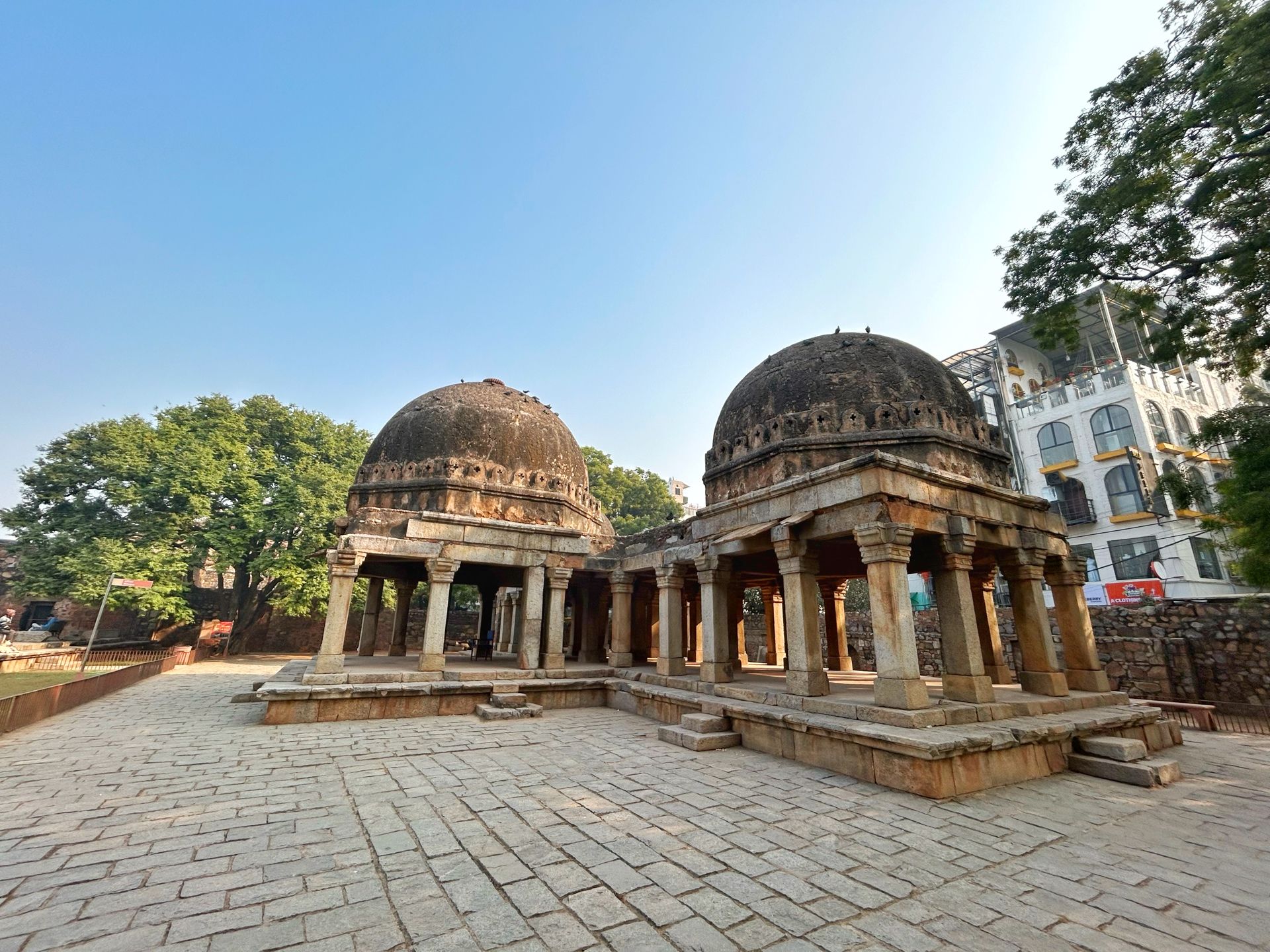
Barah Khamba
Literally "Twelve Pillars," a square tomb from the Tughlaq period that houses several cenotaphs. There are other interesting structures here, like a lamp niche and a bastion.
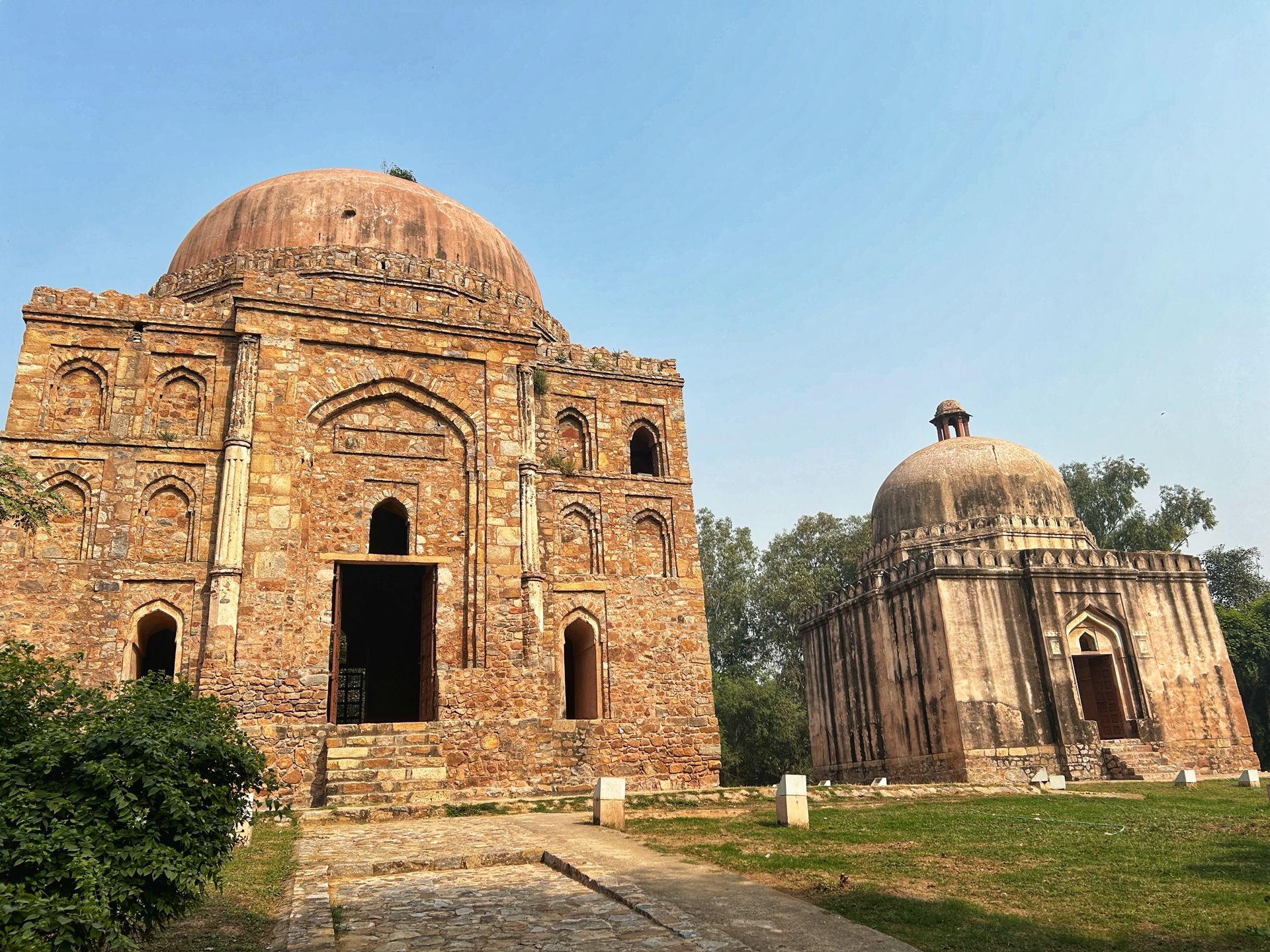
Dadi-Poti Tomb
Carrying a descriptive name, the "grandmother-granddaughter" tombs are a pair of tombs with distinct architectural features. The smaller Poti Tomb, attributed to the Tughlaq period, is characterized by its sloped walls and a lantern-like structure perched on its dome.
In contrast, the larger Dadi Tomb, built during the Lodi era, reflects the more ornate and evolved architectural style of its time.
The differences in design and construction between the two offer a glimpse into the transition of architectural trends across these periods. The Tughlaqs were more practical and utilitarian, while the Lodis focused more on ornamentation.
More in the Hauz Khas series