
— HAUZ KHAS —
Exploring the Complex
Despite being called a "Fort," the complex at the end of Hauz Khas Village's main road is actually a madrasa (Islamic college) and the tomb of one of Delhi's finest sultans, Firoz Shah Tughlaq, who ruled from 1351 to 1388.
Firoz Shah is known for transforming this area into a center of learning and culture. The tradition of learning in Hauz Khas continued in post-independence India with the establishment of the College of Engineering in 1961, which became the Indian Institute of Technology (IIT) Delhi in 1963.
Reaching the Hauz Khas Complex
Option 1: Hauz Khas Metro Station/IIT Metro Station + Auto Ride
Take the Delhi Metro's Yellow Line to Hauz Khas or the Magenta Line to the IIT Metro Station. From there, it's a 10-minute auto-rickshaw ride to Hauz Khas Village. This is the most convenient option, short of a direct taxi. Auto fare typically ranges from ₹40 to ₹50.
Option 2: Green Park Metro Station + Walk or Auto Ride
Take the Delhi Metro's Yellow Line to Green Park Metro Station and enjoy a 20-minute walk through the Green Park neighborhood. This route takes you past the local market and gives you a feel for the area's residential character. The walk is mostly flat and well-paved.
Once you reach the village, follow the main road past the cafes and boutiques. The complex entrance is clearly marked at the end.
Openings Hours
Hauz Khas Fort is open every day from 08:00 AM to 06:00 PM
Entry Tickets
Indian/SAARC/BIMSTEC Citizens | ₹20 |
Foreign Tourists | ₹250 |
Children (under 15) | Entry free |
How To Book Tickets Online
Visit ASI’s official portal
Select Delhi -> Hauz Khas from the monument list
Choose a visit date and time (forenoon or afternoon)
Specify:
Origin and country
Name, age, and gender
Phone number and email
Passport details
Pay via UPI/Credit Card/Debit Card
Receive your digital ticket via email
Here's a quick video tutorial for reference:
Site Plan, Layout & Key Structures
Area Map

The Madrasa complex is laid out in a distinctive L-shaped structure hugging one corner of the ancient lake that bears the name Hauz Khas Lake. The two wings served as student dormitories, with Firoz Shah's tomb positioned strategically at the center where the wings meet. One side of the wings features a beautiful garden with pavilions, while the other faces the water.
Key Structures
Assembly Hall
Where scholars gathered for lectures and discussions
Mosque
A prayer space now closed off to visitors, featuring jharokha windows facing the lake
Garden Pavilions
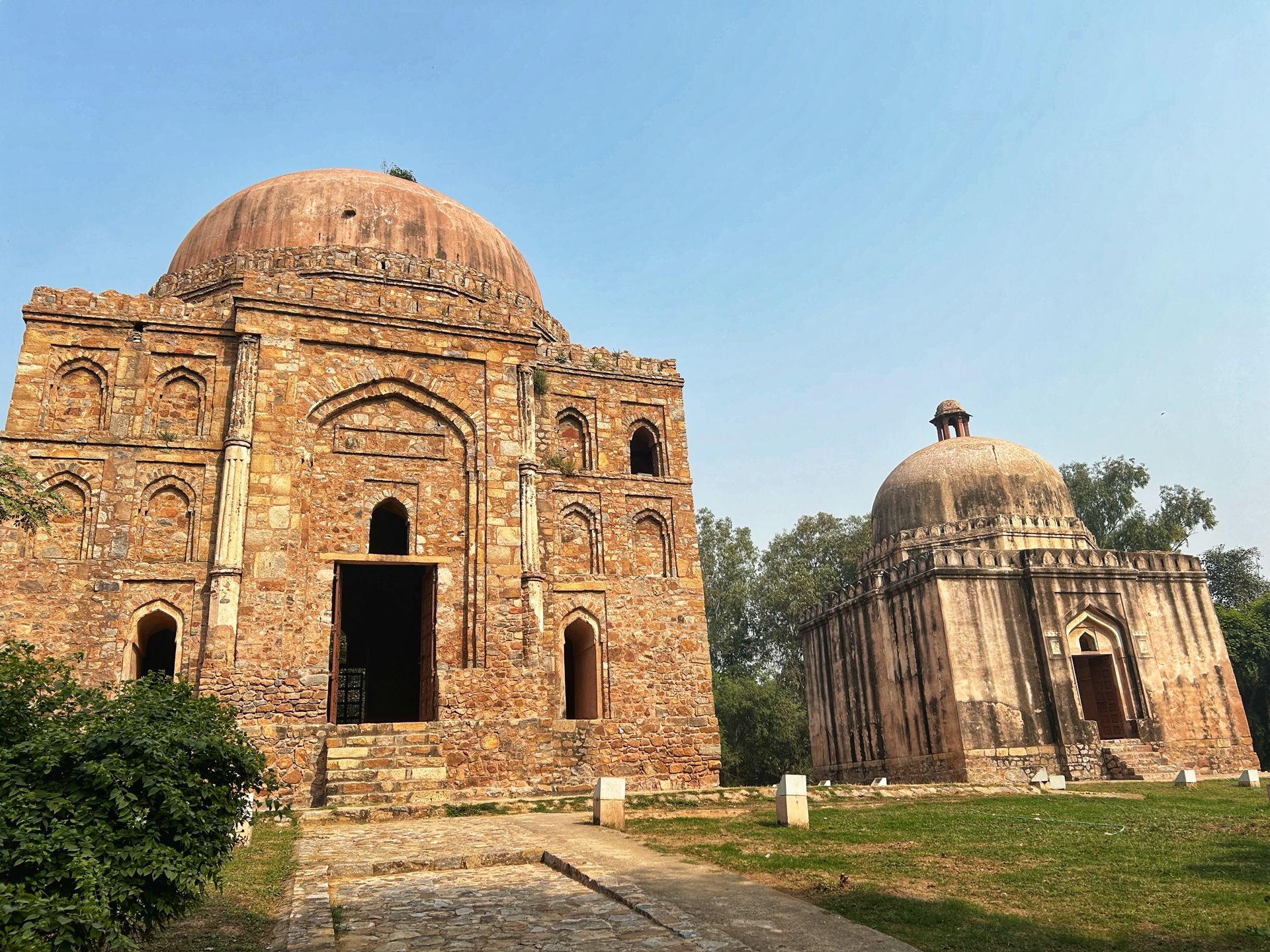
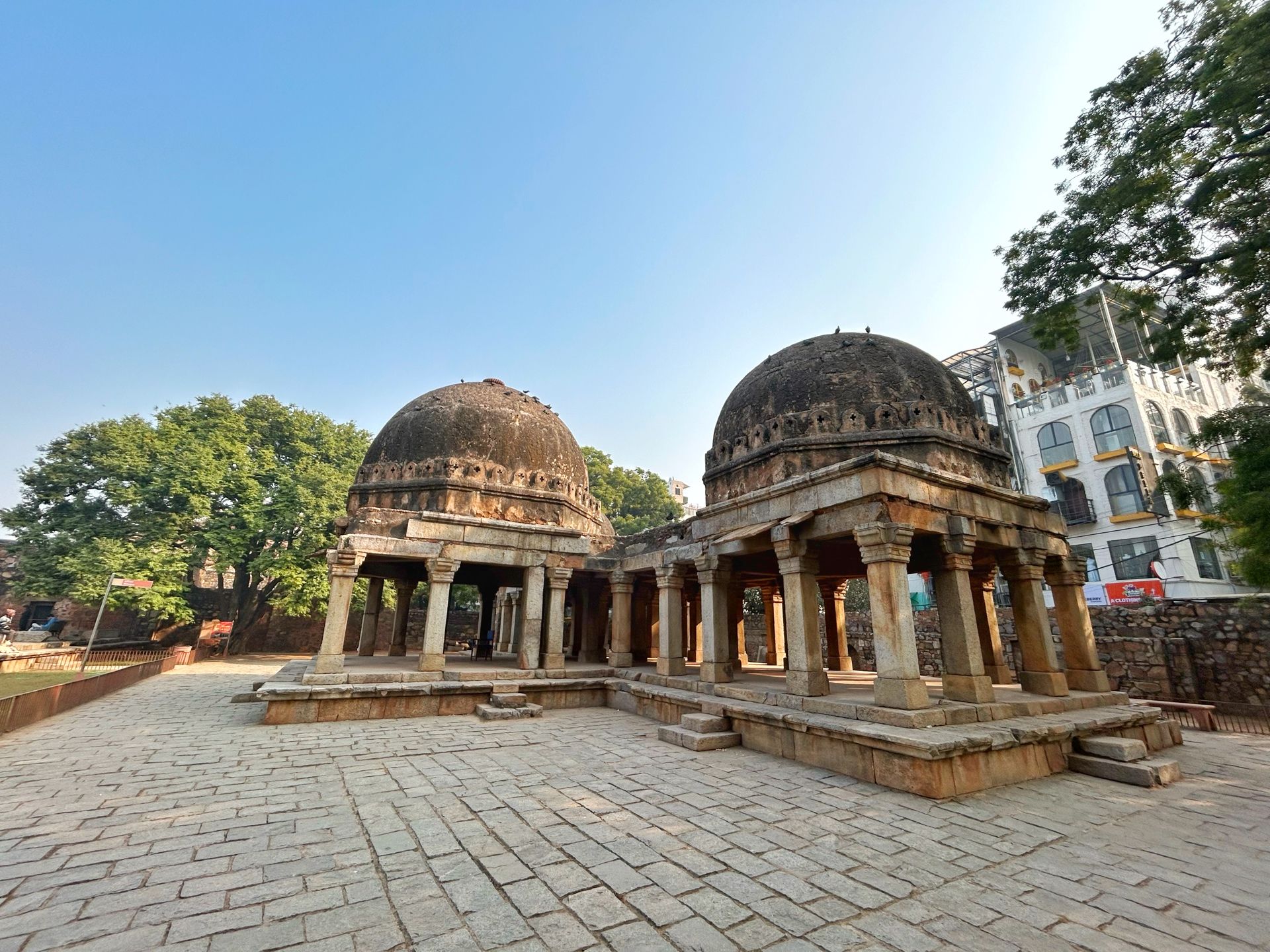
Three elegant canopies, likely funerary structures of important figures associated with the Madrasa
Northern Wing
Student quarters with stunning lake viewpoints
Western Wing
Multi-level dormitories with lower chambers
Tomb of Firoz Shah
The centerpiece where the great sultan rests
Brief History
Hauz Khas traces its roots to the 13th century during Alauddin Khalji's reign, when the massive "Hauz-i-Alai" water tank was built to supply the Siri fort. But it was Firoz Shah Tughlaq who truly brought this place to life in the 14th century.
Under Firoz Shah's 37-year rule, Hauz Khas became a beacon of learning. He revitalized the ancient tank, renaming it the "Royal Tank" or "Hauz Khas," and built around it a lake-facing madrasa and a mosque. The madrasa earned fame across the Islamic world as a center of scholarship.
What makes this place special is how Firoz Shah designed the madrasa in an L-shape around the lake, placing his own tomb at the bend. It's as if he wanted to keep watch over the center of learning he'd created, even in death.
Architecture
The Tughlaqs were practical builders, and this complex shows their genius for combining beauty with function. You'll find a mosque, madrasa, and tomb all in one integrated design—a combination that reflects Seljuk architectural influence.
The tomb's west wall, facing Mecca, doesn't have the usual decorative niches. Instead, it connects directly to the madrasa halls—a clever bit of design that makes the whole complex feel unified. The madrasa's wings are double-storied, with stairs that once led down to the water tank.
The inward-sloping walls and kangura (crenellation) patterns on the garden pavilions remind one that this was still a time when beauty had to be balanced with defense.
More in the Hauz Khas series