
Delhi in 3 Days: A Safe, Crowd-Free & Unforgettable Itinerary
Updated: Jul 10, 2025
Delhi overwhelms most first-time visitors. The sheer scale, crowd and chaos are enough to send anyone running back to their hotel room. But what typical guidebooks don't tell you is that the best of this vibrant city emerges in the quieter moments, when you're not fighting through tour groups or dodging pesky vendors.
Here is a strategic approach to experiencing Delhi's soul in 3 days without the stress.

Timing is Everything
The difference between a magical Delhi experience and a miserable one often comes down to a single factor: when you show up.
Delhi's UNESCO sites open around sunrise, but 90% of visitors arrive after 10 AM. That 7 AM - 10 AM window is pure gold. The light is perfect for photography, the air is cooler, and the sites feel mystical rather than chaotic.
Later in the morning, when the tour buses arrive, you will be out exploring shaded markets or museums.
The Area-by-Area Approach
Many Delhi itineraries can have you zigzagging across the city. This approach is exhausting, expensive, and a bit risky for first-time visitors. Instead, we suggest you dive deep into one area per day.
This strategy offers three key advantages:
Safety through familiarity: You'll quickly learn the rhythms, safe spots, and reliable transport options in each area
Deeper immersion: Instead of checking boxes, you'll actually understand the character of each neighborhood
Easier movement: No rushing through traffic to make it just at the closing hour
Itinerary In A Nutshell
Day 1
Red Fort
Chandni Chowk
Connaught Place
National Museum
India Gate
Day 2
Humayun's Tomb
Humayun Museum / Safdarjung Tomb
Lodhi Art District
Lodhi Gardens
Akshardham Temple
Khan Market
Day 3
Qutub Minar
Hauz Khas Village / Shahpur Jat
Dilli Haat / Shopping Malls
Day 1: The Contrast of Old & New Delhi
The Old Delhi neighbourhood is a living museum of Mughal grandeur founded by Shah Jahan (of Taj Mahal fame) himself. Three centuries later, the British Crown envisioned a 'New' Delhi beside it, led by architect Edward Lutyens.
Early Morning: Red Fort
(9:00 AM - 11:00 AM)
Completed in 1648, the Red Fort was the centerpiece of the Mughal city of Shahjahanabad. It has witnessed all major pivots in the nation's fate since.
The fort looks magnificent in the morning light, when you can actually hear your audio guide unbothered. The museum inside the complex provides excellent context for its many histories, and morning visits mean shorter queues.

Late Morning: Chandni Chowk
(11:30 AM - 1:00 PM)
This is the perfect time to tackle Chandni Chowk - when the morning rush has settled, lunch crowds haven't arrived, and the energy is electric but manageable. You can start by climbing up the minaret of Jama Masjid or head straight into its narrow lanes (galis).
Each gali has its specialty – Dariba Kalan for jewellery, Kinari Bazaar for handicrafts, and Khari Baoli for spices. But stick to the main lanes if it's your first visit - the inner ones are fascinating but save them for when you're comfortable with the area.
Try the legendary paranthas at Paranthe Wali Gali and the kulfi at Kuremal Mohan Lal. Then catch the yellow line from Chandni Chowk or Chawri Bazaar metro station and head to Rajiv Chowk.
Afternoon: Connaught Place
(2:00 PM - 4:00 PM)
After Old Delhi's intensity, Connaught Place in New Delhi will provide a perfect breather. The Georgian architecture of the inner circle is quite elegant, and the radial design makes navigation straightforward. It's also where you can grab a proper coffee and use clean restrooms.
If modern commercial is not your taste, head to the Janpath Market or State Emporiums on Baba Kharak Singh Marg. Later in the afternoon, you can sit by the Agrasen Baoli stepwell, explore medieval astronomy at Jantar Mantar, or witness community service at Gurudwara Bangla Sahib.

Before the clock hits 4:30 PM, take the metro and go 2 stops south to Udyog Bhawan.
Evening: National Museum
(5:00 PM - 7:00 PM)
The National Museum houses India's most comprehensive collection of artifacts spanning 5,000 years of history. If you're keen to know more about the origins of the Indian subcontinent, this is where all the pieces come together.
The museum closes entry gates at 6:00 PM so make sure to reach well in time. It's also fine if you choose to skip this museum if it doesn't interest you. Spend more time exploring Connaught Place instead.
Night: India Gate
(7:00 PM - 9:00 PM)

Step out of National Museum and onto Kartavya Path. Formerly Rajpath or Kingsway, the street showcases how Delhi is reimagining its colonial legacy. The India Gate, now part of a war memorial complex, is brilliantly lit at night.
Your dinner options in the area include Andhra Bhavan Canteen, Gulati, Diggin and Havemore.
Day 2: Grand Burials & Temples
The area extending south of New Delhi lies close to the shrine of the 14th-century Sufi Saint, Nizamuddin Auliya. This made the surrounding land an auspicious burial site for early Islamic rulers, the most prominent being Humayun's Tomb.
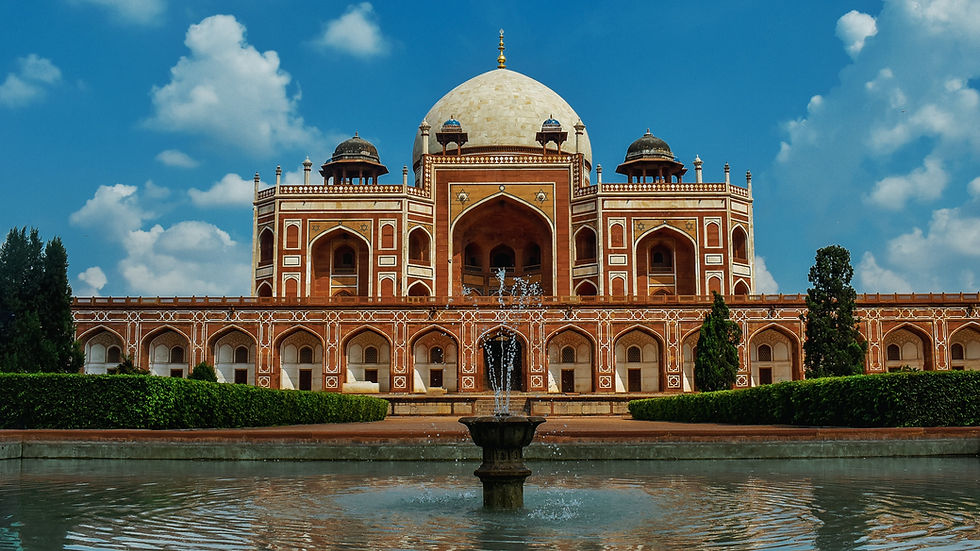
Early Morning: Humayun's Tomb
(8:00 AM - 10:00 AM)
The tomb of Shah Jahan's grandfather, Humayun, eventually became the prototype for the Taj Mahal. At sunrise, it's arguably more beautiful than its descendant. The geometric gardens, the play of light on the dome, the perfect symmetry boasts Mughal architecture at its mathematical best.
Late Morning: Humayun Museum
(11:00 AM - 12:30 PM)
Built within the Humayun's Tomb complex, the Museum showcases the incredible restoration work that brought the gardens back to their 16th-century glory. You'll see before-and-after photos that reveal how overgrown ruins were transformed into the geometric paradise you just walked through. By the way, you can buy a joint ticket to Humayun's Tomb and Museum (and even Sunder Nursery) at a discount.
Alternative: If you have had enough of Humayun, hop in an autorickshaw and head to Safdarjung's Tomb. Known as "the last Mughal flicker", this 1754 tomb is the final notable example of Mughal architecture before the decline of the empire. Literally and figuratively, the 3-kilometer stretch of Lodhi Road between the two monuments connects two distinct epochs.

Afternoon: Lodhi Art District
(1:00 PM - 2:30 PM)
The Lodhi Art District represents Delhi's contemporary creative spirit and acts as a dialogue between international artists and Delhi's urban landscape. The afternoon light is perfect for photography, and the tree-lined streets feel safe and walkable.

For lunch, head to Carnatic Cafe or Mesa Lodhi; then take a 15-minute walk or 5-minute auto ride to Lodhi Gardens.
Late Afternoon: Lodhi Garden
(3:00 PM - 4:30 PM)
Lodhi Gardens provides the perfect transition from urban art to historical ruins. The tombs here predate any other tombs you would have seen in Delhi so far in your journey. The garden is free to enter and is a favorite among Delhi's elite for jogging and yoga.

You can explore its specialty gardens, practice architectural photography or just take an audio tour to understand Delhi's pre-Mughal heritage more deeply.
Evening: Akshardham Temple
(6:00 PM - 7:30 PM)
As the sun sets, head east to Akshardham — a modern marvel that blends spiritual symbolism with monumental craftsmanship. Arrive in time to experience the Sahaj Anand Light & Water Show at 7:30 PM, a captivating display that combines storytelling, water effects, and music.
Note: Entry closes at 6:30 PM. Phones and cameras must be checked in at security, so plan accordingly.
Night: Khan Market
(8:00 PM - 9:30 PM)
Return to central Delhi for a relaxed evening in Khan Market, a favorite among locals and expats alike. Browse boutique stores, sip on something refreshing, or settle in for dinner at one of the area’s popular spots.
Consider Perch, Blue Door Café or The Grammar Room for dinner. Wrap up the night with a scoop from one of Delhi’s go-to dessert spots, Big Chill Cakery.
Day 3: The Sophisticated South Delhi
South Delhi represents modern Indian aspirations while maintaining deep historical roots. This day balances exploration of Delhi's earliest known buildings (12th-14th century) with contemporary culture and shopping.
Early Morning: Qutub Minar
(8:00 AM - 10:00 AM)
The Qutub Complex is Delhi's oldest UNESCO site, and sunrise here feels like stepping back 800 years. The 73-meter minaret catches the first light beautifully, but the real magic is in the details most visitors miss.

The Iron Pillar (4th century) in the complex predates other Islamic monuments by 600 years – it's a reminder that Delhi's history layers go impossibly deep. The defaced deities on the Quwwat-ul-Islam mosque show how Hindu and Islamic artistic traditions merged.
Pro tip: Download the Tourismo app for a free insider guide of the Qutub complex.
Late Morning: Hauz Khas Village
(11:00 AM - 2:00 PM)
Hauz Khas perfectly captures Delhi's layered identity. The 14th-century madrasa ruins overlook a lake, while the "village" buzzes with Delhi's young creative class. It's gentrification, but it's also cultural evolution.

Explore the historical complex first, then transition to the village's boutiques and cafes for lunch. HKV has some cool eateries like Social and Tea Room. For more sophisticated options, head to Essex Farms or Shahpur Jat.
Since it’s your last day in Delhi, take the rest of the day to pick up souvenirs.
Afternoon: Shopping
(3:00 PM - 6:00 PM)
Option 1: Dilli Haat INA (3 kilometers from HKV)
This government-run crafts market showcases India's incredible regional diversity. Each stall represents a different state, and the quality is significantly higher than typical tourist markets. It's also safe, well-organized, and has excellent regional food courts.
Option 2: Mall Exploration (6.5 kilometers from HKV)
If you're curious about aspirational India, Delhi's malls are cultural experiences in themselves. Select City Walk or DLF Avenue show how India's middle class shops, eats, and socializes.
Night: Dinner at a rooftop restaurant in Mehrauli
(7:00 PM - 9:00 PM)
End your Delhi trip with dinner in Mehrauli, where several rooftop restaurants offer views of the Qutub Minar illuminated stunningly after sundown. You're literally dining in the shadow of Delhi's oldest monument while enjoying contemporary Indian cuisine – a perfect full-circle moment.

Alternatives
Delhi has hundreds of places to visit that 3 days (or even 10!) cannot justify. You can modify this itinerary as per your taste and consider the following:
National Gallery of Modern Art
Lotus Temple
Raj Ghat - Mahatma Gandhi's memorial site
National Crafts Museum
Safety & Crowd-Beating Strategies
Navigation
Use the Delhi Metro whenever possible – it's clean, safe, and efficient
If metro route requires you to change lines, check if Uber/Ola can take you there faster
Keep your phone charged and download offline maps
Skip the lines and book monument tickets ahead of time online here
Culture
Dress modestly, especially for religious sites like Bangla Sahib and Akshardham
Learn basic Hindi greetings and phrases
Health & Comfort
Tap water is not safe to drink but you can get packaged drinking water at ₹20 almost everywhere
Wear a mask and use the metro when the pollution levels are high
Have street food only from renowned places with good reviews. If nothing, head to the nearest Haldiram or Bikanervala for authentic and hygienic Indian food that even the locals prefer
Hiring A Guide
You can hire a guide informally at the entrance gates of the UNESCO sites. They'll charge anywhere from ₹600 to ₹1500
If you prefer a more independent experience, opt for an audio guide instead.
Final Thoughts: Delhi Beyond the Guidebooks
After three days, you’ll have a clearer sense of how Delhi’s past and present coexist — sometimes in harmony, sometimes in tension. You’ll move through the city more confidently, and with deeper context.
What stays with you might not be the major landmarks, but the spaces in between — a quiet moment in Lodhi Garden, a Chandni Chowk conversation over chai, or just the rhythm of everyday South Delhi life unfolding around you.
You’ll leave having understood a little more of what makes Delhi work — and why it stays with so many who pass through.


Comments